How to Choose, Use & Love the Perfect Yarn for Knitting Socks
If you’ve ever finished a pair of hand-knit socks only to wear through the heel in a month, the culprit probably wasn’t your knitting — it was your yarn. Sock yarn is a specialized category that looks deceptively simple, but choosing the right fiber, weight, and twist makes the difference between socks that last for years and socks that pill, stretch, or felt into oblivion.
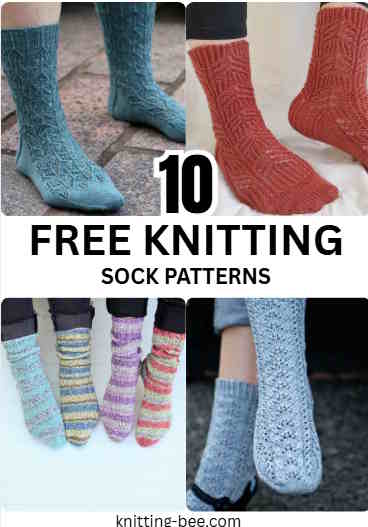
This guide covers everything you need to know about sock yarn: what it is, why it matters, how to choose it, and where to find the best free sock knitting patterns to put it to use.
Key Takeaways: Sock Yarn at a Glance
- The Gold Standard: 75% Superwash Merino / 25% Nylon at a tight twist.
- The Weight: Fingering/Sock weight (400-460 yards per 100g), knit at a gauge of 28-32 sts per 4 inches.
- The Rule of Thumb: One 100g skein almost always makes one average adult pair of socks.
- Yarn Matching: Use self-striping for plain vanilla socks, and solid/tonal yarns for cables or lace.
Top Sock Yarn Recommendations
Note: There are affiliate links here for which I earn a very small comission if you were to purchase the yarn.
Paintbox Yarns Socks
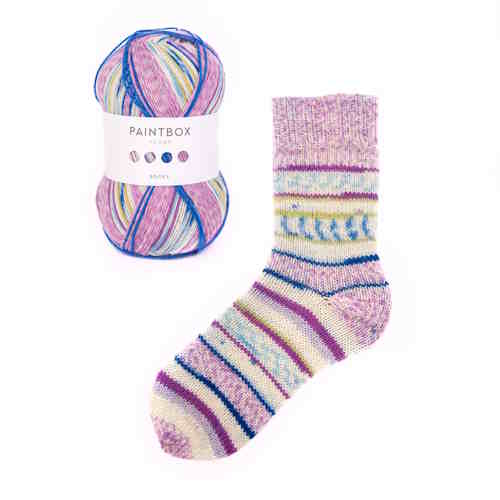
- Type: 75% Wool 25% Polyamide
- Yardage: 427yds / 100g (Fingering)
- Best For: Everyday socks, budget-friendly solid colors
Universal Yarn Bamboo Pop Sock
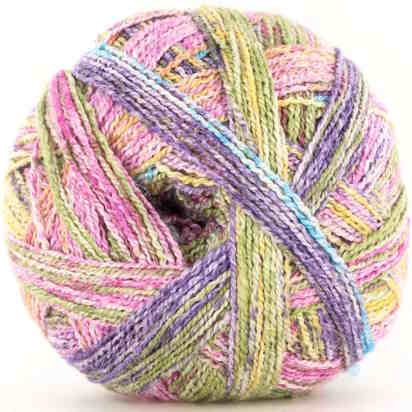
- Type: 55% Bamboo 37% Cotton 8% Other
- Yardage: 492yds / 100g (Fingering)
- Best For: Summer socks, wool allergies, cool breathable wear
What Is Sock Yarn?
Sock yarn is any yarn specifically suited for knitting socks, but in practice, the term has a narrow, widely accepted meaning in the knitting community:
- Weight: Fingering weight (also called 4-ply or sock weight)
- Yardage: Typically 400–460 yards per 100g skein
- Fiber blend: Usually wool with 15–25% nylon for durability
- Gauge: 28–32 stitches per 4 inches on US 1–3 (2.25–3.25mm) needles
The nylon (or sometimes silk or polyester) isn’t optional for most wearers — it’s what prevents the heels and toes from wearing through. Pure wool socks feel divine but rarely survive daily wear.
Why Sock Yarn Is Different from Regular Fingering Yarn
Not all fingering-weight yarn is sock yarn. Here’s what sets true sock yarn apart:
| Feature | Sock Yarn | Regular Fingering |
|---|---|---|
| Twist | Tight, high-twist ply | Often softer, looser twist |
| Durability | Engineered for abrasion | Designed for drape, not wear |
| Elasticity | High memory (springs back) | May stretch and sag |
| Washability | Usually superwash | Often hand-wash only |
| Stitch definition | Crisp, shows texture well | Softer, more blurred |
The tight twist is crucial. Loosely spun yarns — even in the right weight — will felt under foot friction and lose their shape. High-twist sock yarns resist pilling and maintain their structure through hundreds of wearings and washings.
Fiber Blends: What Works and What Doesn’t
Wool-Nylon (75/25 or 80/20)
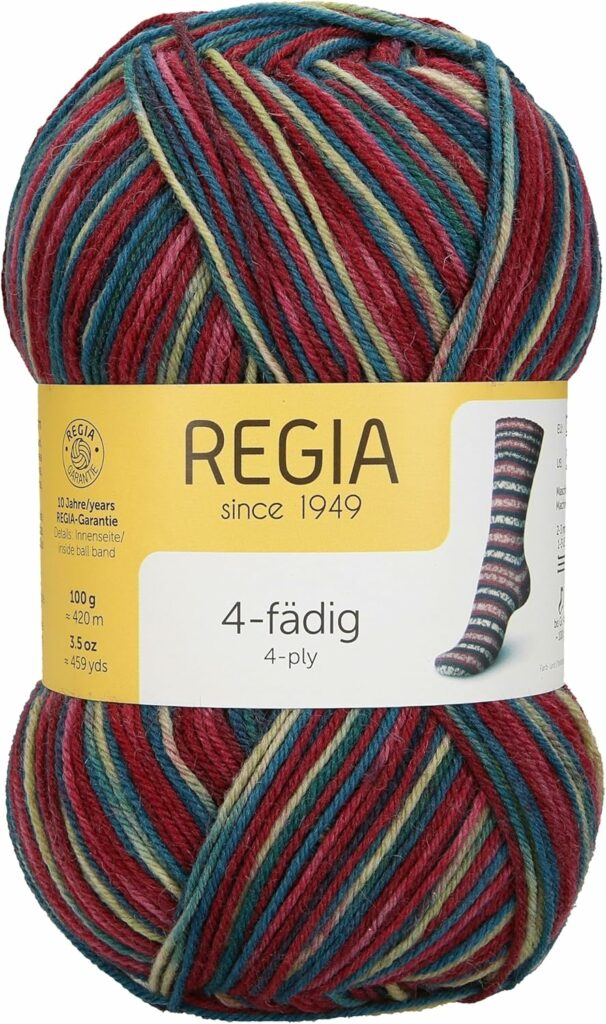
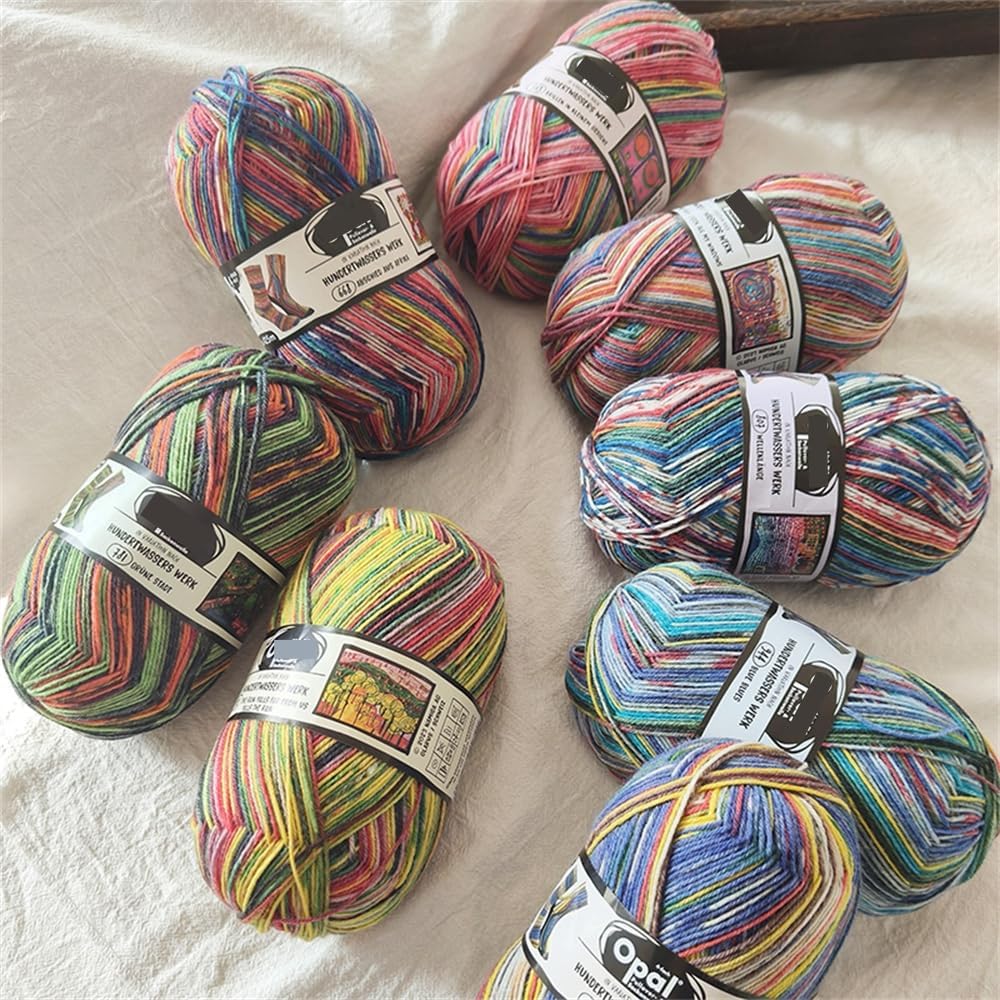
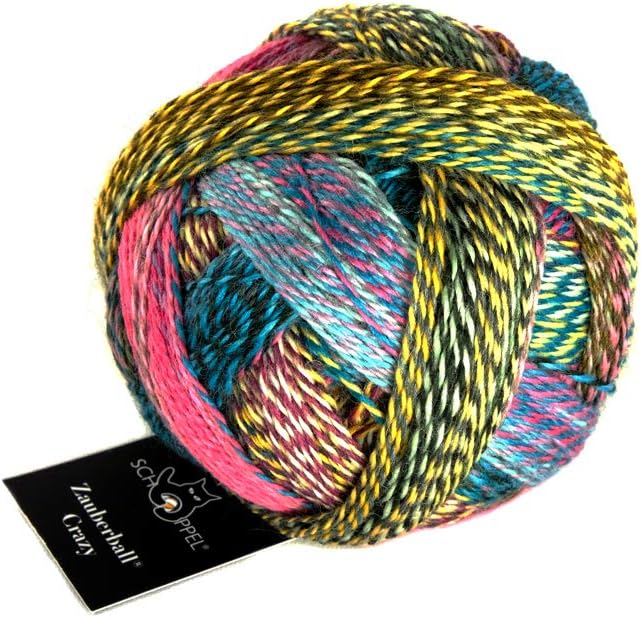
The gold standard. Merino-nylon blends offer softness, warmth, and durability. Brands like Regia, Opal, Zauberball, and Hedgehog Fibres popularized this ratio. The wool provides insulation and moisture-wicking; the nylon provides armor.
Wool-Nylon with Stellina or Metallic
Adds subtle sparkle without sacrificing wearability. Popular for gift knitting and party socks. The metallic fiber is typically nylon-based, so durability stays intact.
Pure Wool (100%)
Best for bed socks, lounging socks, or very cold climates where you won’t wear shoes over them. Brands like Jamieson’s Shetland Spindrift (fingering weight, not technically sock yarn but used for traditional Fair Isle socks) fall here. Beautiful. Not practical for daily wear.
Cotton Blends
Good for summer socks or wool allergies. Look for cotton with nylon or a small percentage of elastic fiber. Pure cotton socks stretch out and stay stretched. Cotton-nylon or cotton-wool-nylon blends perform better.
Bamboo, Tencel, and Plant-Based Fibers
Silky and cool against the skin, but low elasticity. Best blended with wool or nylon. Not recommended as the primary fiber for fitted socks.
Cashmere or Luxury Blends
Often marketed as “sock yarn” but better suited for slipper socks or very gentle wear. Cashmere pills under abrasion. If you want luxury, use it for the cuff and a hardier blend for the heel and sole.
Understanding Sock Yarn Weights
While “sock yarn” technically refers to fingering weight, socks can be knit in other weights:
| Weight | Needle Size | Best For | Notes |
|---|---|---|---|
| Fingering (4-ply) | US 1–2 (2.25–2.75mm) | Everyday fitted socks | Standard. Most patterns written for this. |
| Sport | US 3–5 (3.25–3.75mm) | Quicker socks, slightly thicker | Good for boots or cold climates. |
| DK | US 5–6 (3.75–4mm) | Boot socks, house socks, gifts | Fastest to knit. Less common pattern support. |
| Worsted | US 7–9 (4.5–5.5mm) | Slipper socks, beginner socks | Very thick. Usually not for shoes. |
Most free sock knitting patterns assume fingering weight. If you want maximum pattern compatibility, stick with standard sock yarn.
How Much Yarn Do You Need for a Pair of Socks?
| Size | Yardage Needed | Skeins (100g) |
|---|---|---|
| Women’s average (US 7–8) | 350–400 yards | 1 |
| Men’s average (US 9–10) | 400–450 yards | 1 |
| Large men’s or knee-high | 500–600 yards | 1–2 |
| Ankle socks | 250–300 yards | 1 (with significant leftover) |
Pro tip: One 100g skein of standard sock yarn almost always makes one average adult pair. This is why sock yarn is sold in 100g skeins or 50g “mini” pairs. If you want matching socks from a variegated or self-striping yarn, check that the dye repeats align — some yarns are specifically “sock-set” dyed to guarantee two identical socks.
Self-Striping, Variegated, and Solid: What to Knit With Each
Self-Striping Yarn
The stripes knit themselves as you work. Ideal for plain vanilla socks (basic stockinette or ribbed) where the yarn does the design work. Complex stitch patterns get lost in the color changes. Popular brands: Opal, Regia, Zauberball, Felici.
Variegated / Hand-Dyed
Pools and flashes in unpredictable ways. Best for simple textures — ribbing, seed stitch, basic cables. Avoid intricate lace or cables; the color variation competes with the stitchwork. Hand-dyed yarns from indie dyers (like Hedgehog Fibres, Socks That Rock, Madelinetosh) fall here.
Tonal / Semi-Solid
One color family with subtle shifts. The sweet spot for lace, cables, and textured stitches. Shows off your knitting without competing. Excellent for learning new techniques.
Solid
Best for classic patterns, colorwork, and stitch definition. If you’re knitting a pattern with a charted design, a solid or tonal yarn makes the pattern pop.
Superwash vs. Non-Superwash
Superwash wool has been treated to prevent felting. You can machine-wash superwash socks (cold water, gentle cycle, air dry). This is the practical choice for most knitters.
Non-superwash wool will felt if agitated in warm water. It can be knit into socks, but you must hand-wash them. Some knitters prefer non-superwash for its “grip” — it holds stitch patterns better and can be more durable in the long run because the fibers haven’t been chemically altered.
The catch: Superwash wool can stretch over time and may not hold its shape as well as non-superwash. If your superwash socks bag out, a trip through a warm dryer (briefly!) can restore them.
Stash, Cost, and Value
Sock yarn ranges from $8 to $40+ per skein:
- Budget ($8–$15): Regia, Opal, Knit Picks Stroll, Patons Kroy. Reliable, durable, machine-washable. Excellent for everyday wear.
- Mid-range ($18–$28): Malabrigo Sock, Madelinetosh Tosh Sock, Hedgehog Fibres Sock. Hand-dyed quality with better color depth. Often superwash.
- Luxury ($30+): Cashmere blends, yak-silk-merino, single-ply hand-dyed. Beautiful, special, but rarely practical for hard-wearing socks.
Because one skein makes one pair, sock knitting is one of the most affordable ways to work with luxury fibers. Even a $30 skein yields a pair of custom, heirloom-quality socks.
10 Free Sock Knitting Patterns to Try
Here are ten excellent free sock patterns from the Knitting Bee library, selected for variety in technique, fit, and style. Each works beautifully with standard fingering-weight sock yarn.
1. Basic Ribbed Socks
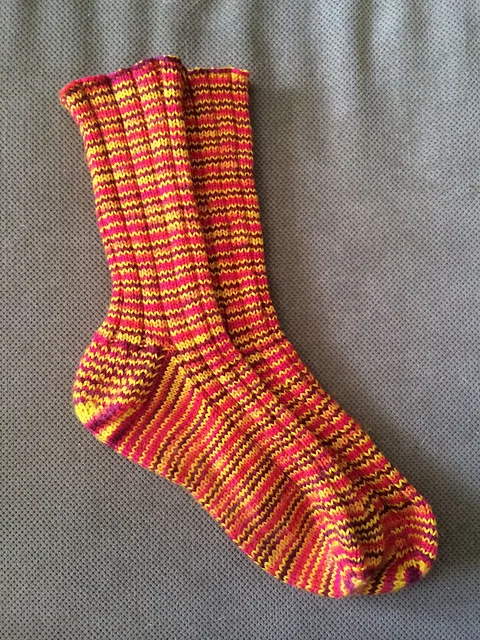
I really appreciate how this pattern breaks down the anatomy of a sock for newcomers, specifically the way it handles the French heel turns. What stands out to me is the detailed explanation of picking up those tricky gusset loops, which often trip people up regarding stitch tension if they pull too tightly. The 2×2 ribbing provides excellent stitch memory and elasticity, ensuring the sock hugs the leg without being too constrictive after blocking. However, I find that managing four double-pointed needles for the entire foot can be a bit fiddly, especially when keeping the float tension even between the needles during the toe decreases.
- Yarn weight: Fingering/sock weight
- Needle size: Size 1 (2.25 mm) dpns
- Skill level: Beginner
- Sizes included: Women’s size 7-8
- Knit flat or in the round: In the round
- Get the free pattern: Get the free Basic Ribbed Socks pattern
2. Basic Toe Up Sock
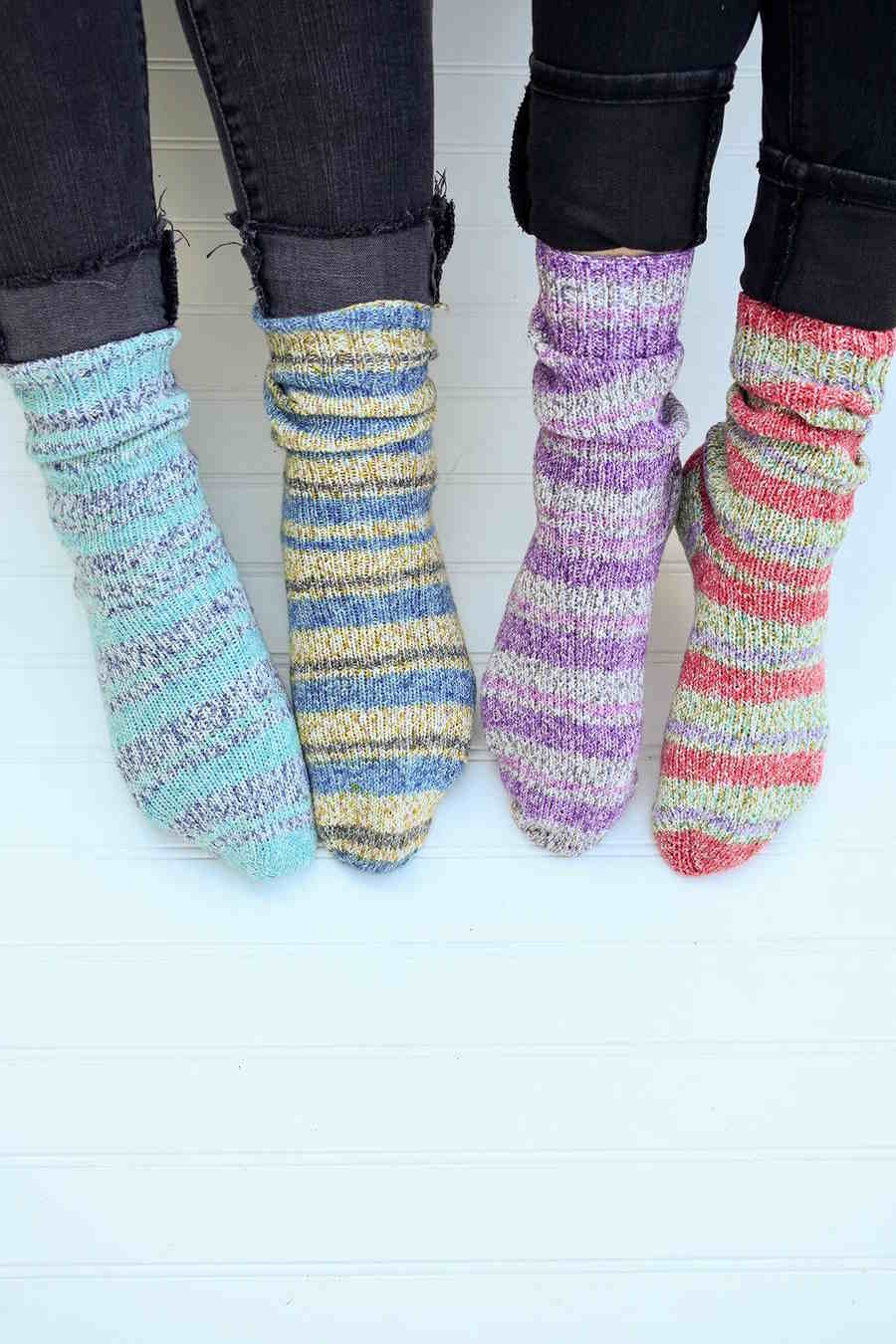
I’m a big fan of how approachable this pattern is, especially for knitters looking to dip their toes into the toe-up method without overwhelming lace or cables. What stands out to me is the yarn choice—a bamboo, cotton, and PBT blend—which gives the finished fabric a beautiful, smooth drape that feels entirely different from traditional wool socks. However, I find that plant-based fibers like this lack the natural stitch memory of wool, meaning the Turkish heel construction without a gusset can be a bit fiddly to fit properly if you have a high instep. You really have to rely on that PBT elasticity to keep the sock from sliding down, and you’ll want to pay close attention to your tension during the short-row heel turn to avoid any loose, baggy stitches after blocking.
- Yarn weight: Sock/Fingering weight
- Needle size: US Size 2 (2.75 mm) double-pointed needles (dpn)
- Skill level: Easy
- Sizes included: 7½” foot circumference (stretches to fit most widths)
- Knit flat or in the round: In the round
- Get the free pattern: Get the free Basic Toe Up Sock pattern
3. Cobblesocks
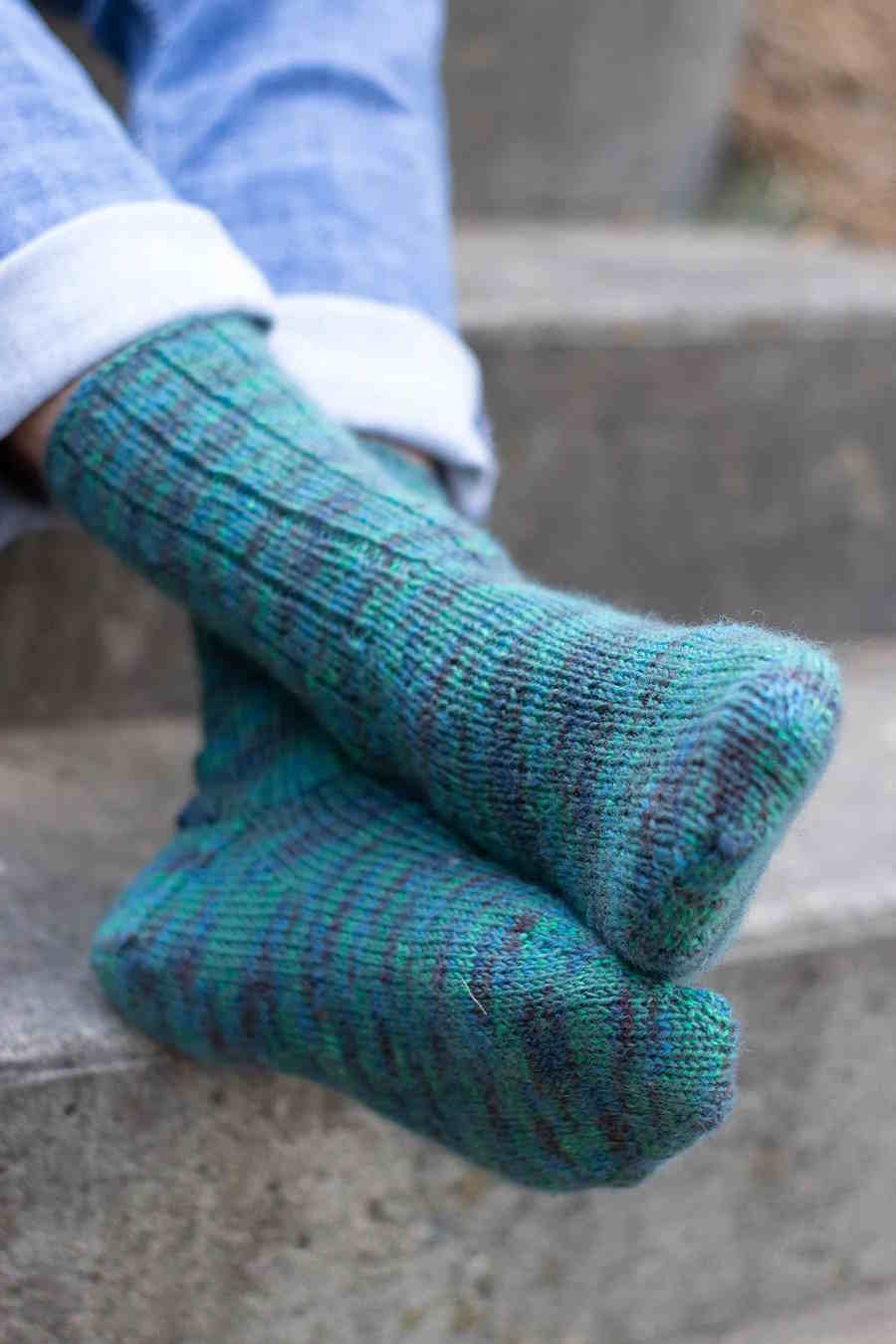
Looking at the construction of this piece, I love that the unique heel extension creates a really smooth, almost seamless transition from the gusset into the heel flap, which is a clever twist on traditional short rows. However, I find that working a heel flap in a heavier superwash merino at this looser gauge can sometimes result in a slightly floppy fabric that lacks the snug stitch memory you really want around the heel turn. I always pay close attention to my tension when slipping all those stitches purlwise, as loose slip-stitch edges can easily stretch out of shape during blocking if I’m not careful.
- Yarn weight: 100% superwash merino wool
- Needle size: US Size 4 (3.5 mm) set of DPNs
- Skill level: Intermediate
- Sizes included: Adult Large
- Knit flat or in the round: In the round
- Get the free pattern: Get the free Cobblesocks pattern
4. Fargyles
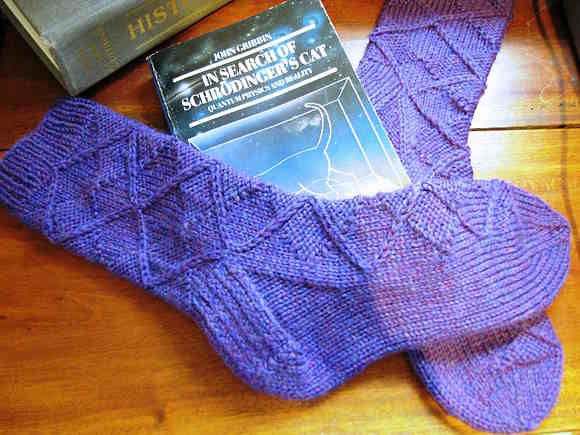
I really appreciate how this pattern cleverly uses simple 1-stitch cables to create the illusion of traditional argyle without the hassle of intarsia or colorwork. What stands out to me is the way the cable pattern transitions seamlessly from the leg to just the instep of the foot, which creates a nice visual continuity while keeping the sole simple and comfortable.
The gauge of 24 stitches per 4 inches in stockinette gives the fabric a nice substantial feel without being too bulky, and the 2×2 ribbing at the cuff provides excellent elasticity that won’t stretch out over time. However, I find that working the chart on just Needle 2 while simultaneously managing the gusset decreases can be a bit fiddly, especially if your tension tends to loosen when switching between different needle manipulations.
- Yarn weight: DK/8-ply
- Needle size: US #5/3.75mm double-point needles
- Skill level: Intermediate
- Sizes included: One
- Knit flat or in the round: In the round
- Get the free pattern: Get the free Fargyles pattern
5. Athabasca
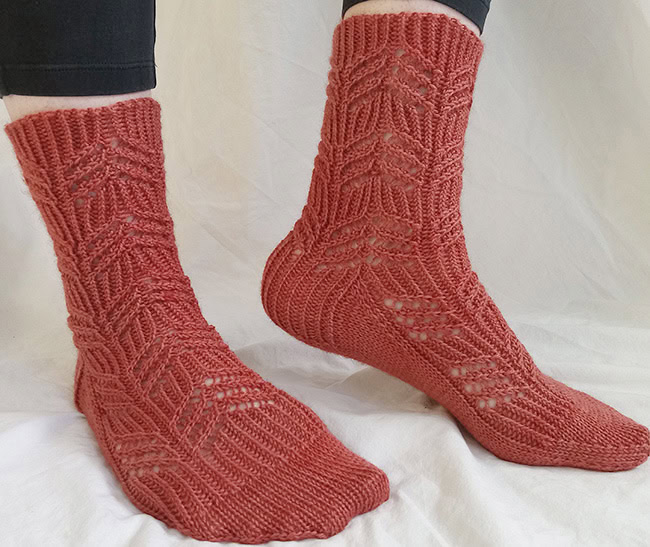
I really love how the diagonal twisted stitch ribbing combined with the lace panels creates such a beautiful cascade effect that perfectly mimics flowing water. The twisted stitches have fantastic stitch memory, which means the cuff won’t bag out over the course of the day, and that tight 32-stitch gauge will give you a wonderfully dense fabric that blocks out beautifully to show off variegated yarns without looking sloppy.
However, I find that picking up and purling that single extra stitch at the gusset setup while simultaneously trying to keep track of the lace chart on the instep is a bit fiddly and easy to mess up.
- Yarn weight: Sock/Fingering weight (80% superwash merino, 20% soft nylon)
- Needle size: US #1 / 2.25 mm needles for small circumference in the round
- Skill level: Intermediate
- Sizes included: Women’s S[M, L]
- Knit flat or in the round: In the round
- Get the free pattern: Get the free Athabasca pattern
6. Grace
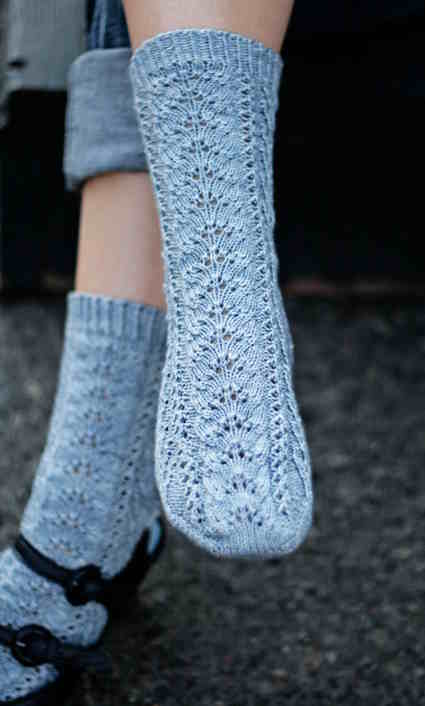
I love how this lace pattern flows seamlessly from the very tip of the toe, creating a continuous vine effect that looks incredibly elegant. The twisted-stitch tendrils add beautiful definition to the fabric, though I find that maintaining even tension on those left and right twists at such a tight 36-stitch gauge can be a bit fiddly. What stands out to me is the high cashmere content in the recommended yarn, which will give the sock a gorgeous, buttery drape after blocking, but it does sacrifice some durability for everyday foot traffic compared to standard wool-nylon blends.
You really have to pay close attention to the significant widthwise stretch of this stitch pattern so the stitch memory doesn’t result in a slouchy mess once the sock is on the foot.
- Yarn weight: Fingering/Sock weight
- Needle size: US #1/2.25mm
- Skill level: Intermediate
- Sizes included: Women’s S [L]
- Knit flat or in the round: In the round
- Get the free pattern: Get the free Grace pattern
7. Interlocking Leaves
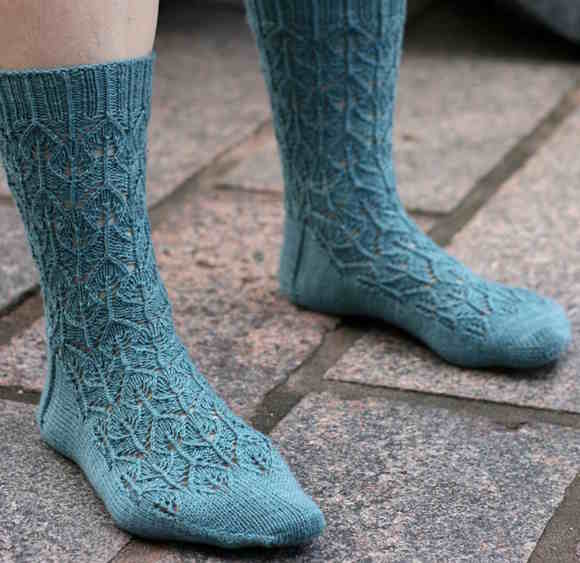
What draws me to this pattern is how organically the leaf motif grows right out of the stockinette toe without any awkward transition rows. The interlocking leaves create a stunning visual texture, but I find that managing the tension between the heavily patterned instep and the plain stockinette sole can be a bit fiddly, often leading to a slightly lumpy gauge if you aren’t careful.
You really have to watch your float tension on the wrong side to prevent the fabric from pulling in too much before blocking. Once wet-blocked, that merino and nylon blend will relax beautifully, and the twisted rib at the cuff will have the perfect stitch memory to keep the sock from slouching.
- Yarn weight: Fingering/sock weight
- Needle size: US #1.5/2.5mm double-point needles
- Skill level: Intermediate
- Sizes included: Small [Large]
- Knit flat or in the round: In the round
- Get the free pattern: Get the free Beauty pattern
8. Spiral Socks
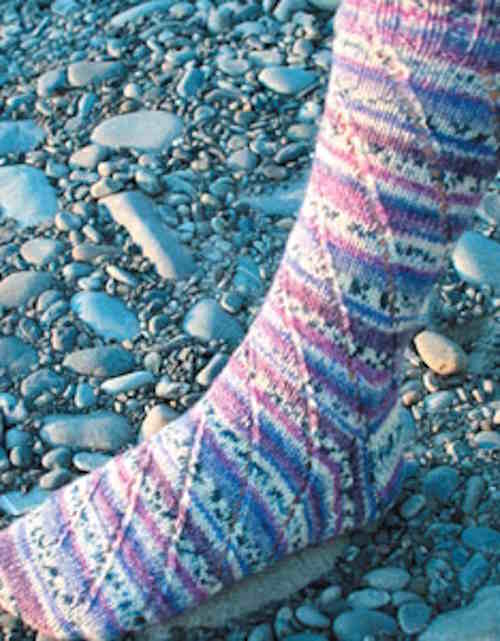
One thing I immediately noticed about this design is the brilliant way the left and right socks spiral in opposite directions to create a symmetrical look when worn. The use of a simple yarn-over and decrease to shift the stockinette columns creates a mesmerizing visual effect that really pops with a variegated yarn. However, I find that shifting the beginning of the round by one stitch every 18 rounds to maintain that spiral can be a bit fiddly and easy to lose track of if you aren’t diligent with your stitch markers. Because traditional Opal yarn can be a tiny bit splitty, you really have to pay close attention to your tension when working those SSKs to keep the eyelets crisp and the float tension even before blocking.
- Yarn weight: Opal Sock yarn
- Needle size: Size 2.5 cm (2.5 mm) double pointed needles
- Skill level: Not for beginner knitters – Intermediate
- Sizes included: One size
- Knit flat or in the round: In the round
- Get the free pattern: Get the free Spiral Socks pattern
9. Trinket Socks
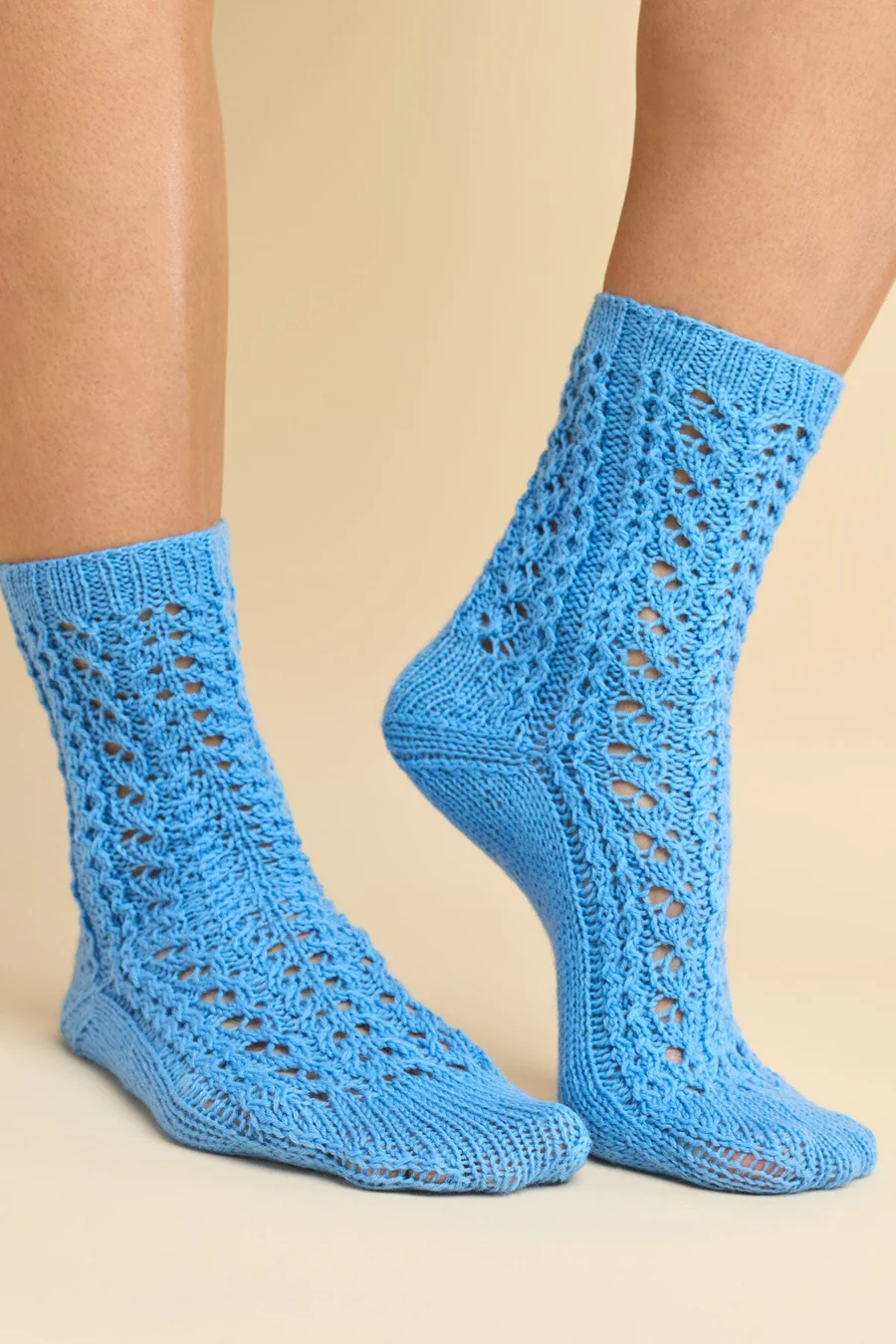
There is a lot to love about how this pattern balances intricate lace with a practical afterthought heel construction. The combination of S2KP2 centered double decreases and left/right twists gives the fabric incredible dimensional texture, and the superwash merino and nylon blend guarantees excellent stitch memory that won’t sag after a day in your shoes. However, I find that juggling all those dense decreases—like the k3tog and sssk—on such a tight 28-stitch gauge can be a bit fiddly, requiring you to really loosen up your tension during the decrease rounds so the yarn doesn’t fight you before blocking.
- Yarn weight: Superwash Merino
- Needle size: US Size 2 (2.75 mm) set of DPNs
- Skill level: Intermediate
- Sizes included: Adult Small/Medium (Medium/Large)
- Knit flat or in the round: In the round
- Get the free pattern: Get the free Trinket Socks pattern
10. Battle of Wills
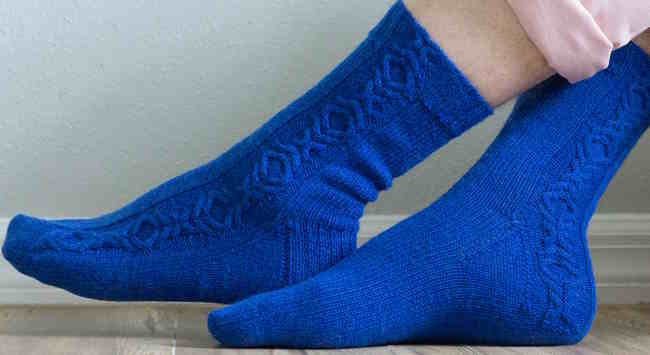
I really love how this design uses clever cable placement to create a mirrored effect between the socks rather than writing two completely different charts. The 100% merino yarn is going to feel incredibly soft and squishy after blocking, making it the ultimate cozy slipper sock. However, I find that the tension transition between those thick, chunky cables and the adjacent stockinette can be a bit tricky, easily leading to tight float tension if you aren’t paying close attention. Additionally, because the yarn completely lacks nylon, you are sacrificing stitch memory, meaning that heavily cabled heel flap might stretch out of shape over time.
- Yarn weight: Sock/Fingering weight (100% Merino Wool)
- Needle size: US #2/2.75mm
- Skill level: Intermediate
- Sizes included: Adult S[M, L]
- Knit flat or in the round: In the round
- Get the free pattern: Get the free Battle of Wills pattern
Quick Reference: Choosing Sock Yarn for Your Pattern
| Pattern Style | Best Yarn Type | Why |
|---|---|---|
| Plain vanilla / ribbed | Self-striping or variegated | Yarn does the visual work |
| Cables / texture | Solid or tonal | Shows stitch definition |
| Lace panels | Solid or semi-solid | Openwork needs clarity |
| Colorwork | Solids in contrasting colors | Clean motif separation |
| Gift knitting | Soft merino-nylon or luxury blend | Impressive feel, special occasion |
| Daily hard wear | Tight-twist wool-nylon, budget-friendly | Durability over softness |
Care and Feeding of Hand-Knit Socks
- Wash: Cold water, gentle cycle or hand-wash. Use wool-safe detergent.
- Dry: Air dry flat. Never tumble dry superwash on high heat — it can over-relax the fibers.
- Store: Fold, don’t hang. Cedar blocks keep moths away.
- Repair: Darn holes in the heel or toe promptly. A small hole becomes a blown-out sock quickly.
Sock yarn is the most technical yarn category most knitters will use, but that precision is what makes hand-knit socks possible. The right wool-nylon blend, tight twist, and fingering weight will give you socks that outlast store-bought pairs and feel infinitely better on your feet.
Start with a basic pattern, a reliable wool-nylon skein, and US 1.5 (2.5mm) needles. By the time you finish your first pair, you’ll understand why sock knitters are so evangelical about their craft.
Ready to cast on? Browse the full collection of free sock knitting patterns on Knitting Bee, from beginner tubes to advanced colorwork designs.
FAQ
Yes, but you’ll need DK-weight patterns and larger needles. The resulting socks are thicker and usually won’t fit in standard shoes.
A smooth, plied wool-nylon blend in a light or medium color so you can see your stitches. Avoid dark, fuzzy, or single-ply yarns until you’re comfortable.
Likely causes: loose gauge, superwash wool without enough twist, or a fiber blend with low elasticity. Try going down a needle size or switching to a tighter-twist yarn.
For summer or wool allergies, yes — but only if it contains nylon or elastic. Pure cotton lacks memory and will sag.
Use reinforced heel patterns (slipped-stitch heel flaps, Eye of Partridge), consider adding a strand of nylon thread to the heel, or knit the heel and toe in a harder-wearing yarn.
This guide was written for knitters of all levels. If you have questions about a specific yarn or pattern, the Knitting Bee community is here to help.