There’s something quietly magical about a stitch that looks complicated but knits up in a simple, rhythmic four-row repeat. The Eyelet Mesh is exactly that kind of deception—delicate, lacy, and impossibly airy, yet built from nothing more than basic knits, purls, and a single decrease paired with a yarn over.
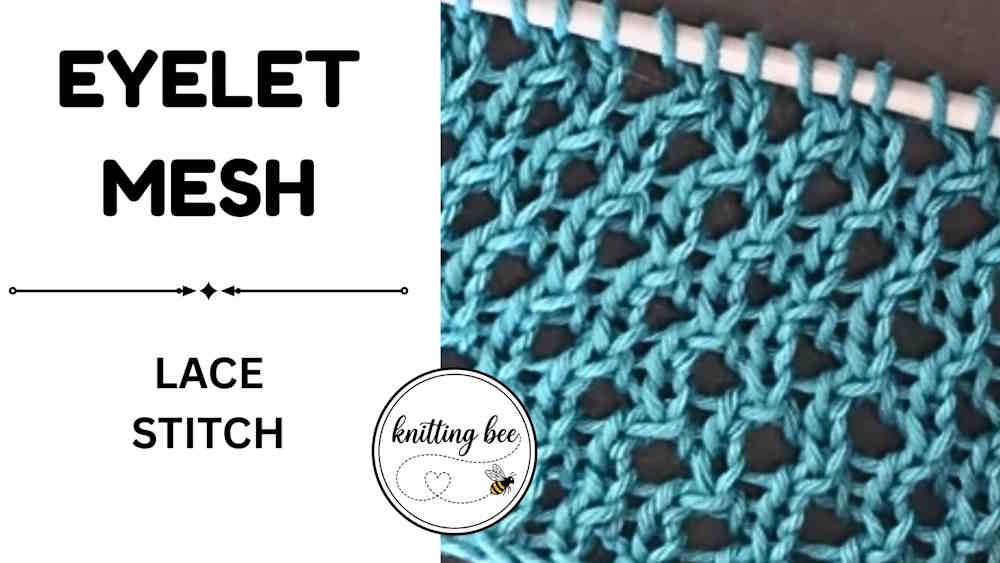
Worked in a multiple of three, this stitch creates a fabric of soft diagonal eyelets that travel in gentle zig-zags across the surface, catching light and shadow like tiny windows. The wrong-side rows are nothing but plain purling, giving your hands a rest and your brain a break while the pattern rows do all the architectural work. Off the needles, it looks a bit humble and crumpled—don’t be fooled. A good blocking transforms it into something crisp, open, and flowing, with drape that begs to become a summer scarf, a breezy market bag, or the panel of a lightweight cardigan.
Because the decreases shift between rows, the fabric carries a subtle bias that adds character rather than chaos, lending a natural, hand-woven feel to the finished piece. It’s forgiving enough for adventurous beginners who have mastered yarn overs, yet satisfying for experienced knitters who want a meditative, TV-friendly project. Grab a smooth cotton or silk-blend yarn, go up a needle size or two, and let the eyelets open up. This is the kind of stitch that makes you fall in love with lace all over again.
Critical Tips for Success
These are gold for a YouTube tutorial:
- Blocking is non-negotiable. This stitch looks like a crumpled disaster off the needles. Wet-block or steam-block aggressively, pinning out each eyelet. It transforms the fabric.
- Count after every pattern row. Because k2tog and yo happen in different orders, it’s easy to drift. The repeat is only 3 stitches—easy to spot-fix.
- Tension matters. If you knit tightly, the yo holes will be pinpricks. If you knit loosely, you’ll get dramatic openwork. Encourage viewers to swatch.
- The “last stitch” trick. Both action rows end with a single k1. Tell viewers to pause when they have 1 stitch left on the needle—that’s their sanity check.
- Lifelines. For beginners, run a thin waste yarn through a purl row every few repeats. If they mess up a pattern row, they only rip back to the lifeline.
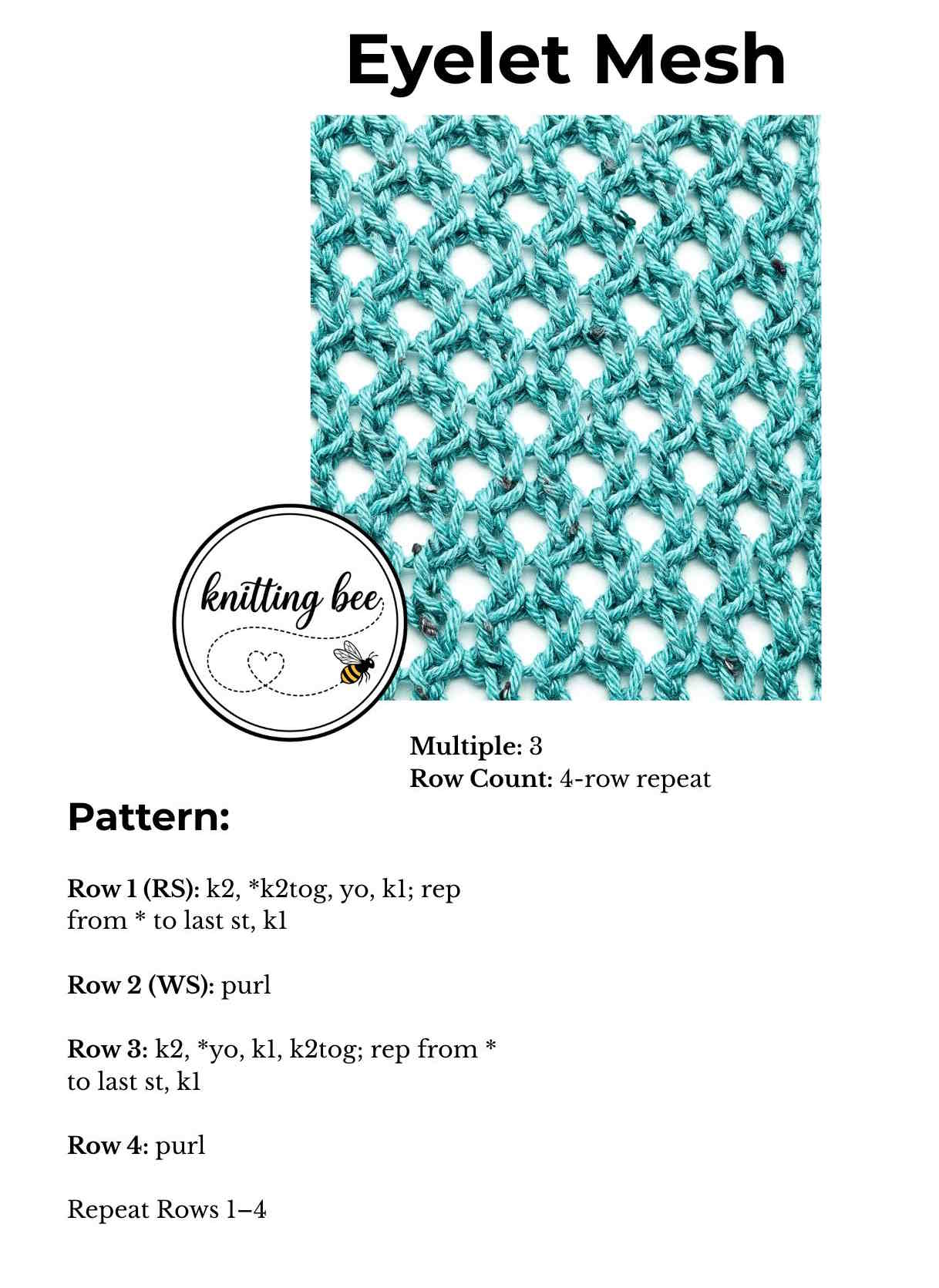
Eyelet Stitch Pattern
Multiple: 3
Row Count: 4-row repeat
Pattern:
- Row 1 (RS): k2, k2tog, yo, k1; rep from to last st, k1
- Row 2 (WS): purl
- Row 3: k2, *yo, k1, k2tog; rep from * to last st, k1
- Row 4: purl
Repeat Rows 1-4
Best Yarn & Needle Choices
- Yarn: Smooth, light-colored, solid or tonal yarns work best. Variegated yarns fight the delicate texture. Cotton, linen, bamboo, or silk blends shine here because they highlight the drape. Fuzzy yarns (mohair, alpaca) will obscure the eyelets.
- Needles: Go up 1–2 sizes from what the yarn label suggests. Lace needs room to open up. If the fabric looks like a wrinkled mess before blocking, you’re doing it right.
Mesh Eyelet Video Tutorial Step by Step
Project Ideas
This stitch screams summer wardrobe:
- Market bags—the holes are functional, and the bias actually helps the bag expand
- Beach cover-ups or lightweight cardigans—breezy and quick to knit
- Lacy scarves or cowls—works beautifully with a single skein of fingering weight
- Baby blankets—surprisingly effective with a soft DK cotton; just back it with fabric if the holes are too big for little fingers
- Edging or inserts—alternate panels of this mesh with solid stockinette for a designer touch