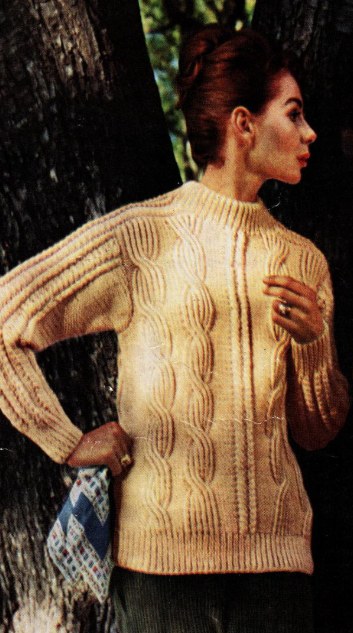
This vintage sweater is a classic cable-front design that balances strong texture with a clean, wearable silhouette. It reflects mid-century knitwear styling, where surface pattern was the feature and shaping was precise but understated. The result is a garment that feels substantial, architectural, and timeless.
The sweater is worked in a bold twisted-cable motif, framed by deep ribbing at the hem and cuffs and finished with a wide ribbed neckline. The cables are symmetrical and deliberately placed, creating strong vertical lines that visually lengthen the body. Between the cables, reverse stocking stitch panels add contrast and help the cable work stand out clearly.
The fit is classic and structured, neither oversized nor tightly fitted, with a straight body and set-in sleeves. This makes it a versatile style that layers well and holds its shape over time—very much in keeping with vintage knitwear traditions.
The Pattern
Construction Overview
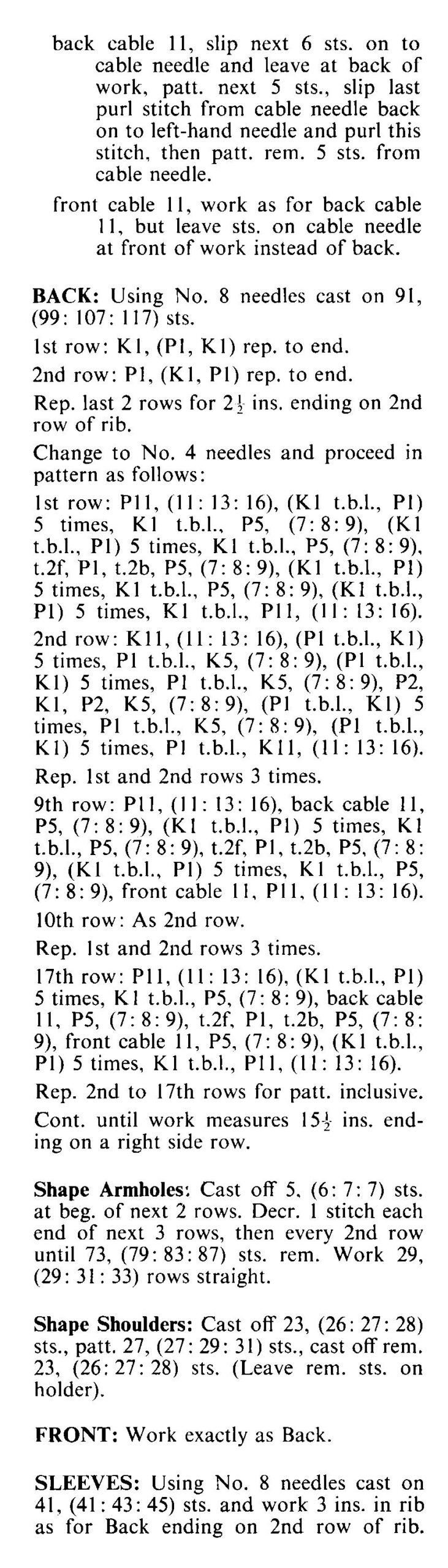
- Worked in separate pieces: back, front, and sleeves are knitted flat and assembled.
- Set-in sleeves with sleeve extensions: The sleeves are shaped to extend slightly into the shoulder line, a common vintage technique that provides stability and a crisp shoulder finish.
- Bottom-up construction: Each piece begins with ribbing, then transitions into the main cable pattern.
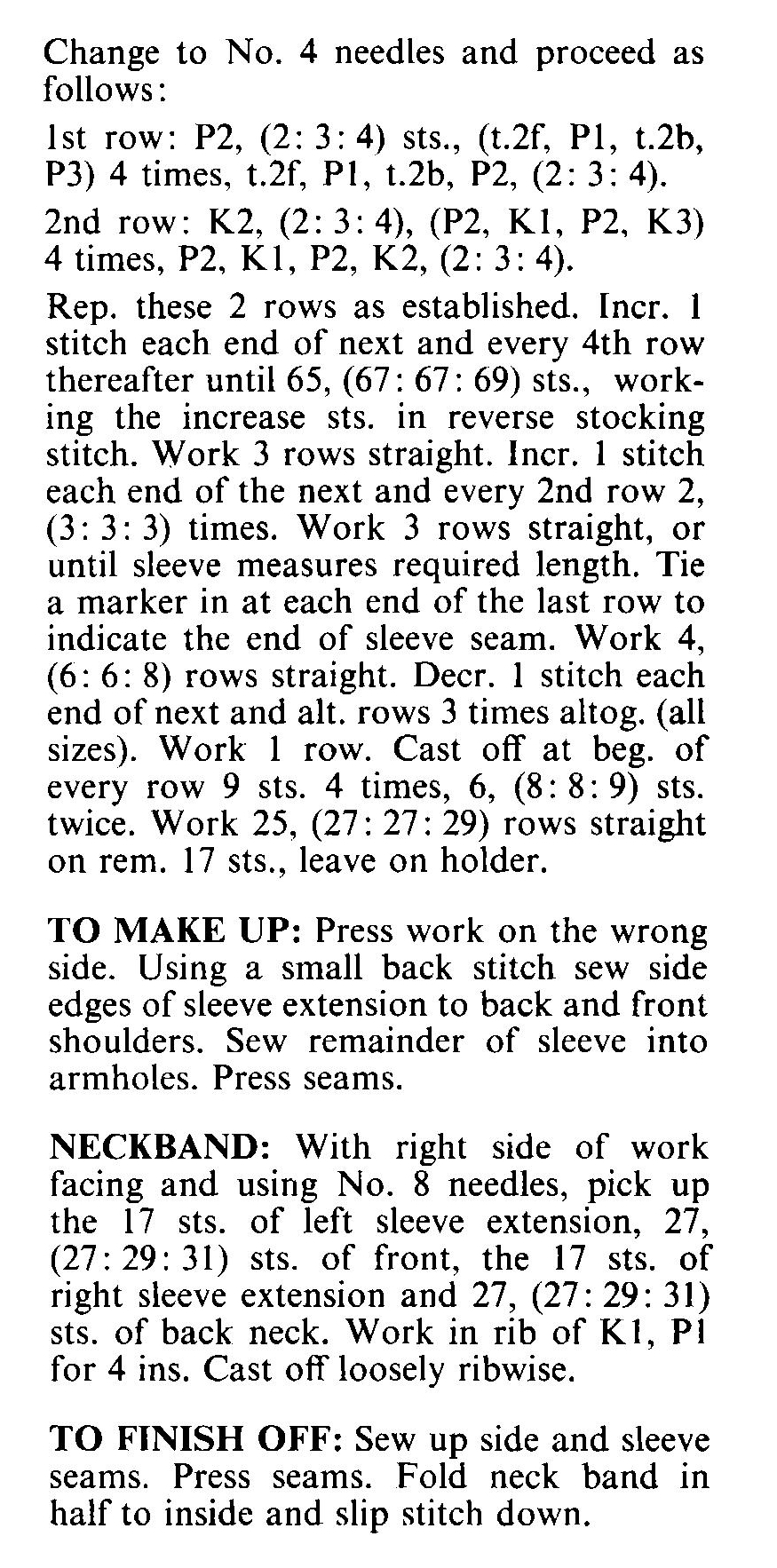
- Neckband added last: Stitches are picked up around the neckline and worked in rib before being folded and slip-stitched down on the inside for a polished, double-thickness collar.
This method creates a neckline that sits flat, wears well, and resists stretching—an intentional design choice in older patterns.
Cable Pattern Characteristics
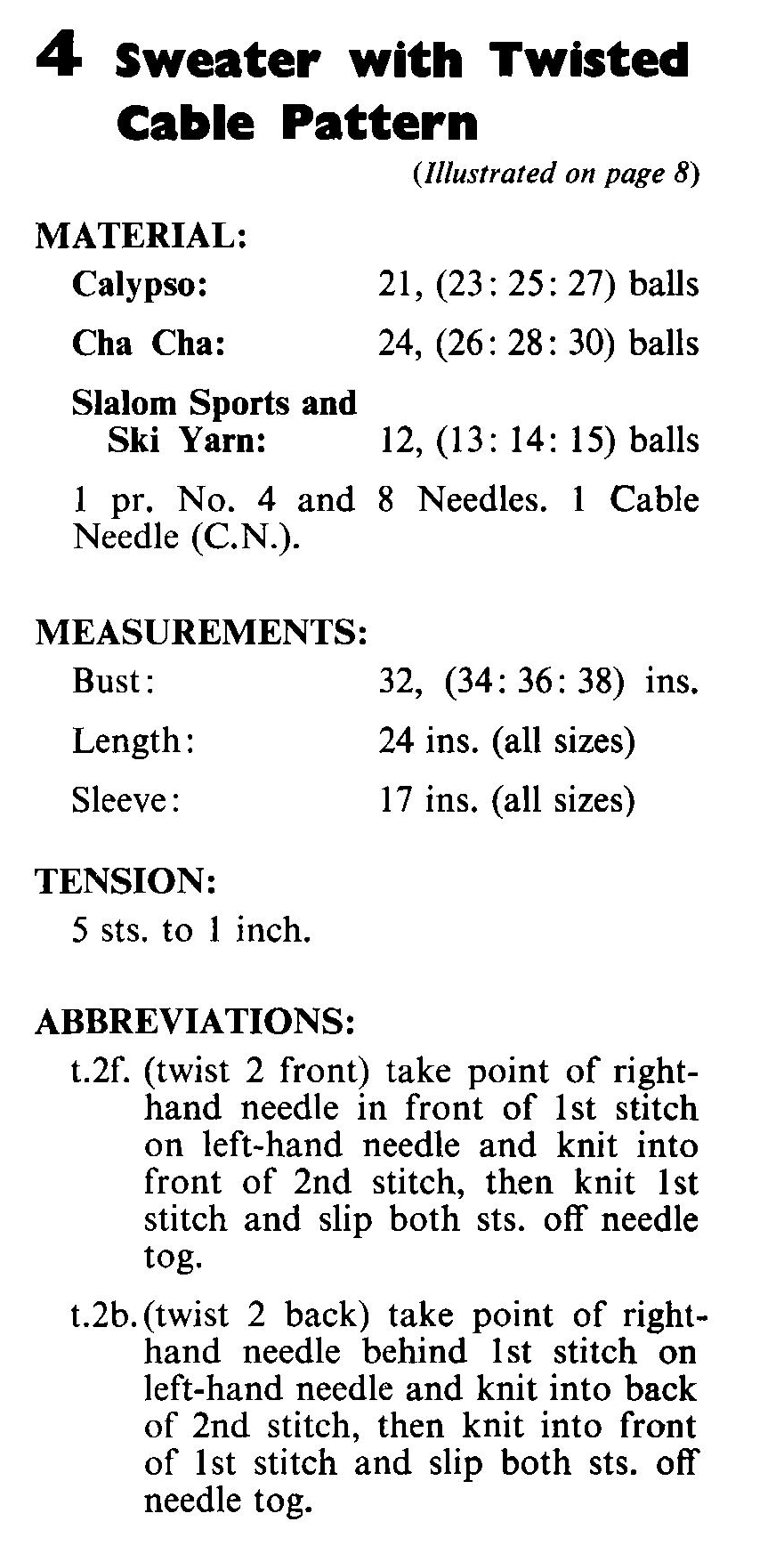
The defining feature of this sweater is its twisted cable work, created using both front and back twists rather than modern cable crossings. This produces a firm, slightly raised cable with excellent stitch definition.
Key characteristics:
- Cables are integrated into the fabric, not isolated panels.
- Twists are balanced with purl sections to prevent the fabric from pulling in unevenly.
- The pattern has a strong rhythm, repeating consistently across the body and sleeves.
Because the cables rely on twisting stitches rather than frequent cable-needle crossings, the fabric is dense, durable, and visually striking without being overly bulky.
Sleeves & Armhole Shaping
The sleeves mirror the body’s texture, carrying simplified cable motifs that align with the overall design. Gradual increases shape the sleeve, followed by structured decreases and cast-offs that form the sleeve head.
Markers are used to indicate key construction points, ensuring accurate assembly and a well-fitted armhole. Once sewn in, the sleeves sit smoothly without excess fabric at the underarm.
Neckline & Finishing
The neckline is one of the standout finishing details:
- A deep ribbed neckband is worked after assembly.
- The band is folded to the inside and hand-stitched down, creating a neat, tailored edge.
- This double layer adds warmth and durability while maintaining a refined appearance.
Final finishing includes careful pressing on the wrong side only, preserving the cable texture while evening out the fabric.
Yarn & Fabric Qualities
The recommended yarns reflect the era: firm, smooth, wool-based fibers designed to showcase texture and hold structure. At a relatively firm gauge, the finished sweater has weight and definition, making it ideal for cooler weather and long-term wear.
Substituting with a modern yarn works best when choosing something with:
- good stitch memory,
- minimal halo,
- and enough body to support cables without collapsing.
Who This Pattern Is For
This sweater is well-suited to knitters who:
- enjoy traditional cable work,
- appreciate vintage construction techniques,
- want a garment with lasting shape and presence.
It’s not a fast knit, but it is a deeply satisfying one, producing a sweater that looks intentional, substantial, and unmistakably classic.