If you have a 100g ball of yarn sitting in your stash, there are plenty of useful things you can knit with it. Hats, fingerless gloves, cowls, headbands, baby accessories, small toys and other quick projects can often be made with 100g of yarn or less.
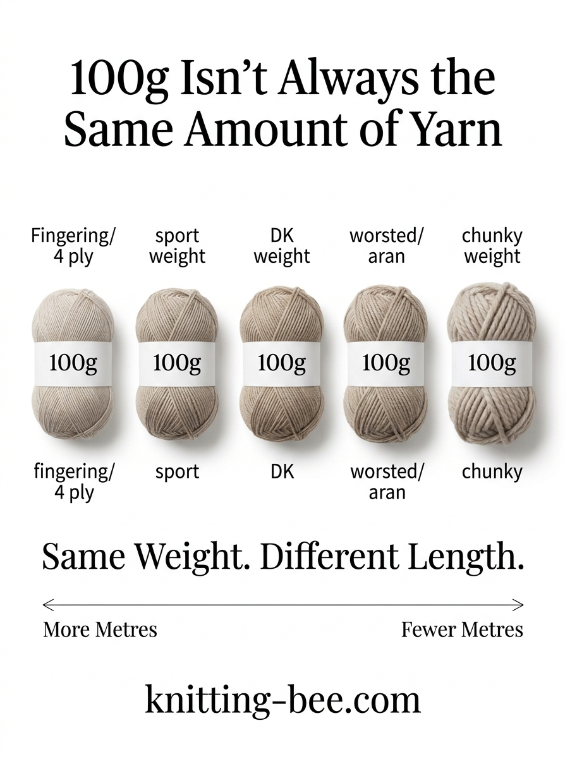
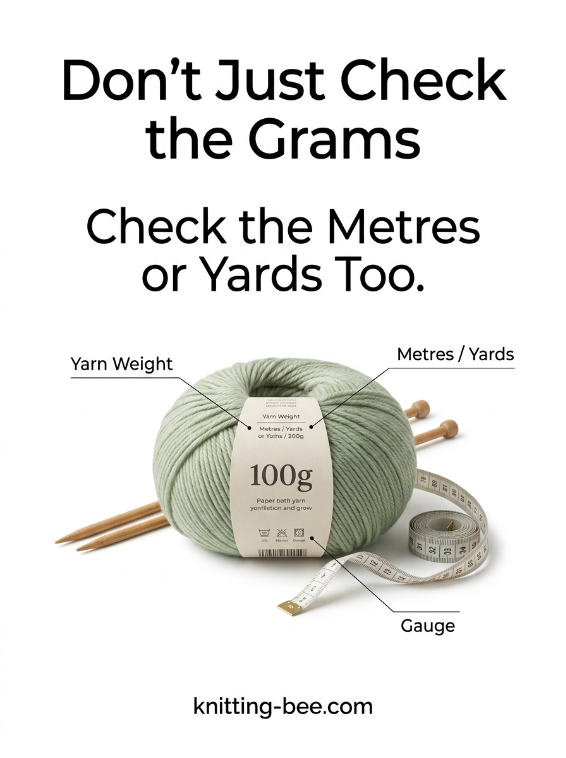
The important thing to check is yardage or meterage, not just weight. A 100g ball of fine 4 ply yarn contains far more metres of yarn than a 100g ball of chunky yarn, so what you can knit will depend on the yarn weight, your gauge and the size of the finished project.
- Best projects for 100g of yarn: hats, cowls, mitts, headbands, baby booties, small toys and accessories
- Best for beginners: headbands, simple hats and basic cowls
- Best for using almost the entire ball: hats, cowls and fingerless gloves
- Best for small amounts: baby accessories, ornaments and tiny knitted projects
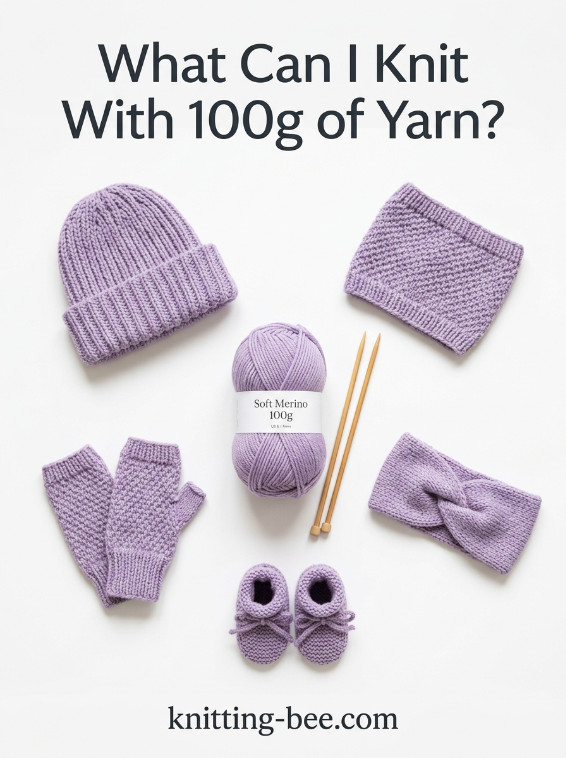
What Can You Usually Knit With 100g of Yarn?
Here is a quick guide.
| Project | Is 100g Usually Enough? | Skill Level |
|---|---|---|
| Adult hat | Yes | Easy |
| Baby hat | Yes | Beginner |
| Headband | Yes | Beginner |
| Fingerless gloves | Usually | Easy |
| Small cowl | Usually | Easy |
| Baby booties | Yes | Easy |
| Baby mittens | Yes | Easy |
| Small knitted toy | Usually | Easy–Intermediate |
| Mug cosy | Yes | Beginner |
| Small pouch | Yes | Easy |
| Adult scarf | Usually not | Beginner |
| Baby cardigan | Depends | Easy–Intermediate |
| Adult sweater | No | Intermediate |
These are estimates rather than fixed rules. Always compare the metres or yards you have with the yardage required by the knitting pattern before casting on.
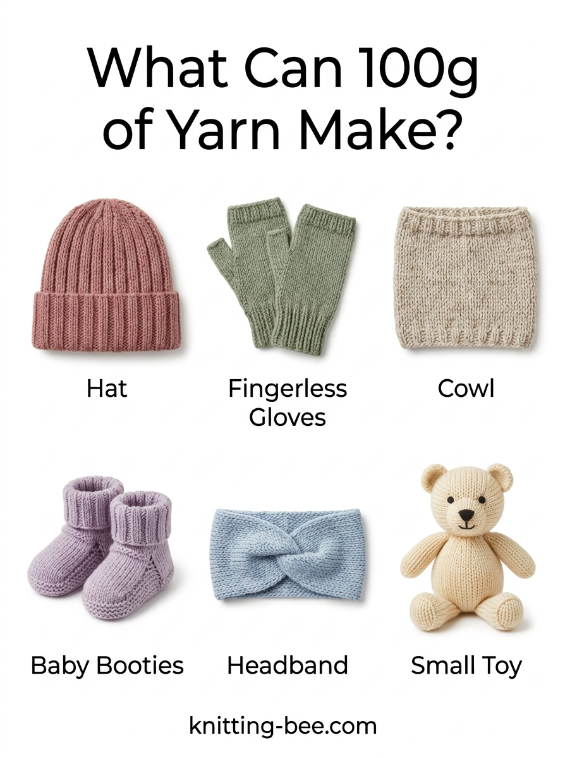
17 Things You Can Knit With 100g of Yarn
1. A Knitted Hat
A hat is one of the best ways to use a single 100g ball of yarn. Many adult hats require less than 100g, particularly when knitted in DK or worsted-weight yarn.
Simple ribbed hats, beanies and stockinette hats are especially good one-ball projects.
2. Baby Hat
Baby hats use very little yarn, making them ideal when you have a partial or full 100g ball left from another project.
You may even be able to make several hats from one ball.
3. Fingerless Gloves
Fingerless gloves are another excellent small knitting project. Because there are no fingers to knit, they generally require considerably less yarn than full gloves.
Fingerless Gloves Knitting Patterns
4. Knitted Headband
If you want an especially quick project, knit a headband or ear warmer.
A simple ribbed headband can use only a fraction of a 100g ball, leaving enough yarn for another small project.
5. Small Cowl
A close-fitting neck warmer can often be knitted from one ball.
Choose a simple stitch pattern if your yardage is limited. Elaborate cables and heavily textured stitches can consume more yarn.
6. Baby Booties
Baby booties require very little yarn and are a useful way to turn leftover yarn into a finished project.
They are also a good choice if you have several small amounts of coordinating colors.
7. Baby Mittens
Tiny mittens are another economical project and can often be paired with a matching baby hat.
Baby Mittens Knitting Patterns
8. Knitted Bow
Small knitted bows can be used on baby clothes, hair accessories, gift wrapping and other knitted projects.
9. Mug Cosy
A mug or cup cosy requires very little yarn and is an easy project for newer knitters wanting to practise cables, colorwork or textured stitches.
10. Small Knitted Toy
Small bears, rabbits, cats and other knitted toys can often be made with considerably less than 100g.
Keep in mind that toys may require additional materials such as stuffing and embroidery yarn.
11. Christmas Ornament
Stars, miniature stockings, Christmas trees, baubles and other knitted decorations are excellent stash-busting projects.
A single 100g ball could make many ornaments.
Christmas Ornament Knitting Patterns
12. Knitted Flowers
Knitted flowers use only tiny quantities of yarn and are useful for embellishing hats, bags, cardigans and homewares.
13. Baby Socks
A small pair of baby socks is another project that requires relatively little yarn.
14. Adult Socks
This depends heavily on the yarn.
A 100g skein of dedicated sock yarn is commonly intended to provide enough yarn for a pair of adult socks, although foot size, leg length, gauge and pattern all affect yarn requirements.
15. Small Drawstring Bag
Use your yarn for a little drawstring pouch for notions, jewellery, gifts or other small items.
16. Dishcloth
If your 100g ball is suitable cotton, simple knitted dishcloths are another practical option.
17. Swatches for Learning New Knitting Stitches
Don’t overlook your yarn as an opportunity to learn something new.
A spare ball is perfect for practising lace, cables, textured stitches or colorwork without committing to a large project.
You can browse the knitting stitch patterns on knitting-bee.com to find something new to try.
How Far Does 100g of Yarn Go?
This is where things become more complicated.
100g measures the weight of the yarn, not its length.
Two balls can both weigh exactly 100g while containing dramatically different amounts of yarn.
For example, a fine fingering or 4 ply yarn may contain several hundred metres per 100g, while a chunky or super bulky yarn may contain only a fraction of that length.
This is why the label on your yarn is so important.
Look for:
- yarn weight
- metres or yards per ball
- ball or skein weight
- recommended needle size
- recommended gauge
When choosing a pattern, compare the pattern’s required yardage with the actual yardage on your yarn label.
Is 100g of Yarn Enough for a Hat?
In many cases, yes.
An adult knitted hat can often be made with 100g of yarn, and baby and children’s hats generally require even less.
Large sizes, oversized slouchy hats, elaborate cables, double-layered designs and very dense stitch patterns may require more.
Always check the individual pattern.
Can You Knit a Scarf With 100g of Yarn?
You can knit a small scarf with 100g, but it may not be enough for a conventional long adult scarf.
A better option may be a:
- short neck scarf
- small cowl
- skinny scarf
- child’s scarf
- decorative scarf
- neck warmer
If you specifically want to make a long scarf, check your yarn’s meterage before choosing the pattern.
Is 100g Enough for a Pair of Socks?
It often is when using sock yarn.
Many commercial sock yarns are sold in 100g skeins designed to make approximately one pair of adult socks.
However, very large sizes, long legs, cables and some stitch patterns can increase yarn requirements.
Is 100g Enough for a Baby Cardigan?
Sometimes, particularly for a very small newborn garment made from fine yarn, but 100g should not automatically be assumed to be enough.
Baby cardigan yarn requirements vary substantially according to size, yarn weight, sleeve length, construction and stitch pattern.
If you only have 100g available, choose a pattern that specifically lists a required yardage within the amount you have.
What If I Have Slightly Less Yarn Than the Pattern Requires?
Running out of yarn with only a few rows remaining is something most knitters would rather avoid.
If your yarn is limited, you can sometimes reduce the amount required by:
- making the garment or accessory slightly shorter
- choosing shorter sleeves
- making a smaller pompom or omitting it
- using another yarn for borders or trims
- choosing a simpler stitch pattern
- adding a contrasting color
- making a shorter cowl
- weighing your yarn as you knit
Don’t automatically assume that changing to larger needles will solve a yarn shortage. Changing needle size also changes your gauge and the dimensions and fabric of the finished project.
The Best Projects When You Have Exactly One 100g Ball
If you want the greatest chance of completing a project without needing another ball, start with:
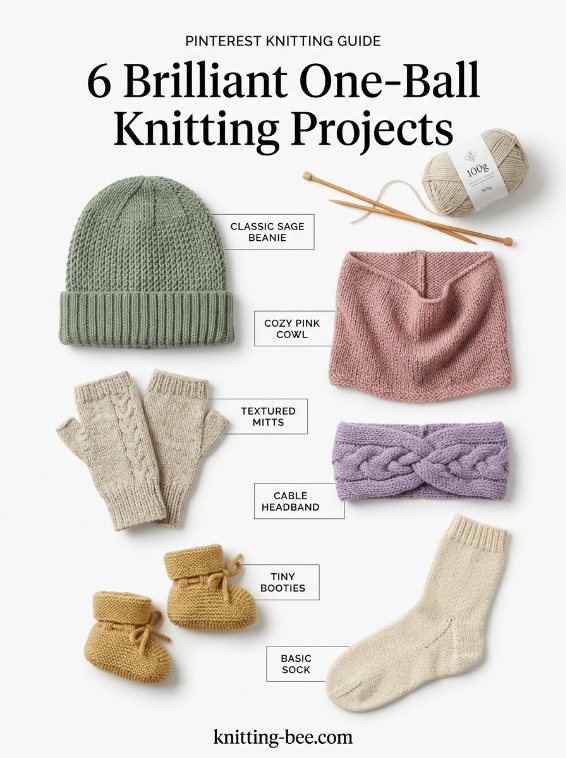
A hat — practical and often uses most of one ball.
A cowl — easy to adjust the length according to the yarn remaining.
Fingerless gloves — small, useful and ideal for special yarn.
A headband — one of the safest choices when yardage is limited.
Baby accessories — hats, booties and mittens require relatively small quantities.
Socks — particularly when your 100g skein is specifically sold as sock yarn.
Before You Cast On
Check the yarn label first.
The most useful number isn’t 100g.
It’s the metres or yards.
Once you know the yarn weight and yardage, you can make a much better decision about what you can realistically knit without playing yarn chicken on the final few rows.
And if 100g is all you have, don’t underestimate it. One ball can still become a beautiful hat, pair of mitts, baby accessory, cowl, pair of socks or one of dozens of smaller knitting projects.
Browse the free knitting patterns and knitting stitch library at knitting-bee.com to find your next project.
Frequently Asked Questions
What is the easiest thing to knit with 100g of yarn?
A simple headband, basic hat, small cowl or washcloth is a good choice for a beginner. The best option depends on the yarn weight and fibre.
What can I knit with 100g of DK yarn?
A 100g ball of DK yarn can often be used for an adult hat, baby accessories, fingerless gloves, a headband or a small cowl. Check the meterage of your particular yarn before selecting a pattern.
What can I knit with 100g of chunky yarn?
Chunky yarn contains fewer metres per 100g than finer yarn, so choose a compact project such as a hat, headband or small cowl.
Can I make a sweater with 100g of yarn?
Generally, 100g is not enough for an adult sweater. Some very small baby garments made with fine yarn may use around this amount, but you should follow the yardage requirements of the individual pattern.
Does knitting needle size affect how much yarn I use?
Yes. Needle size affects gauge and fabric density, which can affect yarn usage. Rather than changing needle size simply to save yarn, use the needle size necessary to achieve the pattern’s required gauge.
Should I measure leftover yarn in grams or metres?
Knowing both is useful, but metres or yards provide a better indication of whether you have enough for a particular pattern. If you know the original ball’s weight and meterage, weighing the remaining yarn can also help you estimate how much length remains.