Chinese Lanterns Knitting Stitch – Free Pattern

Chinese Lanterns Stitch – Free Knitting Pattern

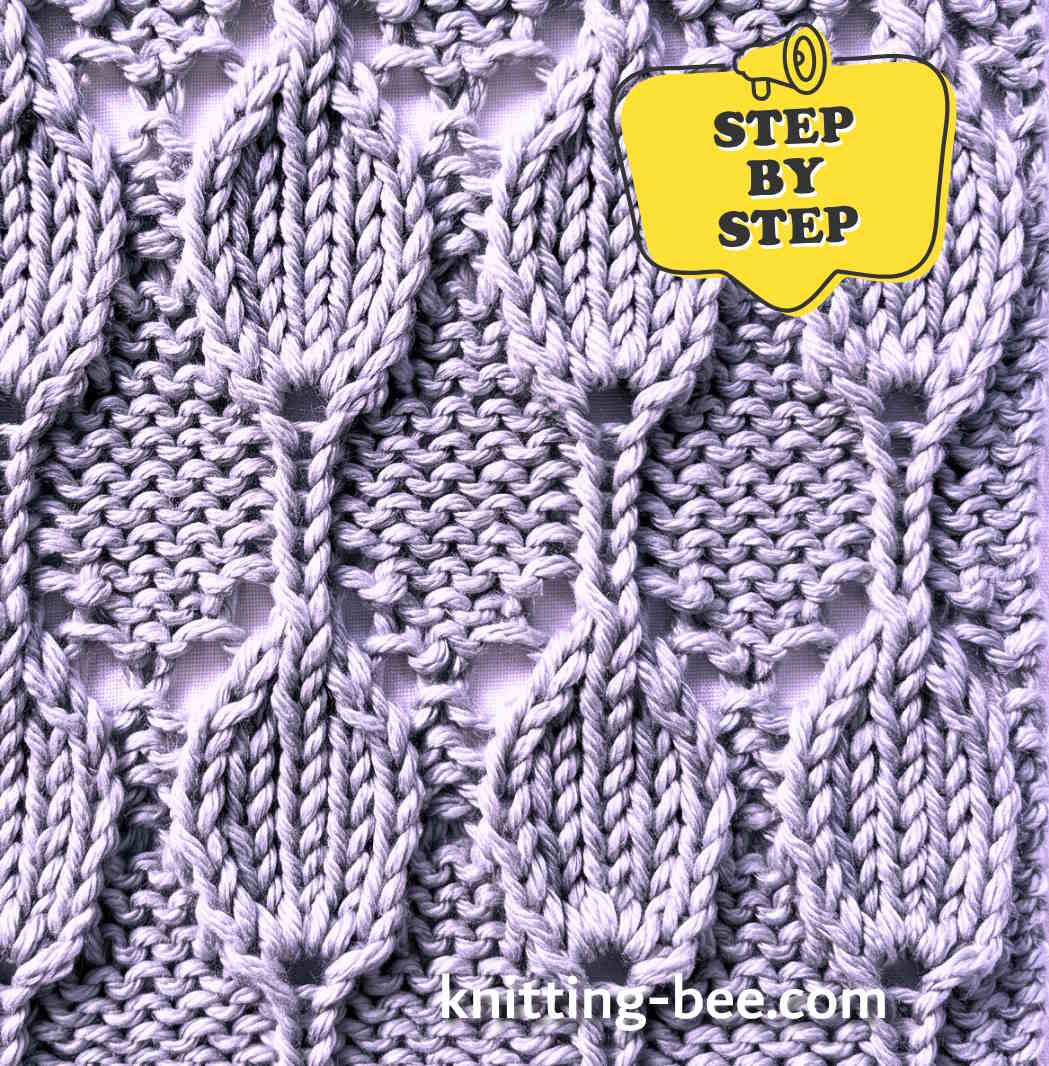
The Chinese Lanterns Stitch is a textured lace pattern that combines bold bobble-like clusters with delicate openwork. The effect resembles rows of glowing lanterns, making it an eye-catching choice for borders, panels, or full-fabric designs.

This stitch is created by working a dramatic decrease (purling 9 stitches together) balanced with yarn overs to restore stitch count and add decorative openings. Between the lantern motifs, simple knit and purl sections give the fabric structure. The result is a flowing, scalloped texture that looks beautiful on sweaters, skirts, dresses, or lightweight accessories.

Worked over a multiple of 11 stitches + 2 for symmetry, plus edge stitches, the Chinese Lanterns Stitch is rhythmic and easy to repeat once established.


Abbreviations

  • RS – Right Side
  • WS – Wrong Side
  • k – knit
  • p – purl
  • yo – yarn over
  • p9tog – purl 9 stitches together as one
  • rep – repeat
  • st(s) – stitch(es)
  • edge st – edge stitch (slip the first stitch knitwise, purl the last stitch, or use your preferred edging)

If this pattern is worked along the lower edge of a sweater, skirt, or dress, it will create a beautiful scalloped edge without the need for additional finishing.
You can also use the “lantern” motif to knit a summer beret or hat. For this pattern, it’s best to choose fine yarn or medium-weight threads.

Chinese Lanterns Knitting Stitch - Free Pattern

Pattern Directions:

Repeat = 11 stitches + 2 stitches for symmetry + 2 edge stitches

Cast on 26 stitches.

Row 1, 7, and 9 (RS): Edge st, purl 2, knit 9; repeat from * to * 2 times, purl 2, edge st.

Row 2 (WS): Edge st, knit 2, yarn over, purl 9 stitches together (see chart and legend), yarn over; repeat from * to * 2 times, knit 2, edge st.

Row 3 (RS): Edge st, purl 2, knit 3; repeat from * to * 2 times, purl 2, edge st.

Row 4 (WS): Edge st, knit 2, purl 1, yarn over, purl 1, yarn over, purl 1; repeat from * to * 2 times, knit 2, edge st.

Row 5 (RS): Edge st, purl 2, knit 5; repeat from * to * 2 times, purl 2, edge st.

Row 6 (WS): Edge st, knit 2, (purl 1, yarn over) – repeat the bracketed instructions 4 times, purl 1; repeat from * to * 2 times, knit 2, edge st.

Rows 8 and 10 (WS): Edge st, knit 2, purl 9; repeat from * to * 2 times, knit 2, edge st.

Repeat Rows 1–10 until desired length is reached.


Chinese Lanterns Chart:

NOTE: This is a translation from a Russian pattern

Punto Farolillos Chinos – Patrón de Tejido Gratis

El Punto Farolillos Chinos es un punto calado con textura que combina grupos llamativos de puntos abultados con delicados encajes. El efecto se asemeja a hileras de farolillos encendidos, lo que lo convierte en una elección muy vistosa para bordes, paneles o incluso tejidos completos.

Este punto se crea trabajando una disminución pronunciada (tejiendo 9 puntos juntos del revés) equilibrada con lazadas que devuelven el número de puntos y añaden aberturas decorativas. Entre los motivos de farolillo, secciones sencillas de punto derecho y revés aportan estructura al tejido. El resultado es una textura ondulada y festoneada que luce preciosa en jerséis, faldas, vestidos o accesorios ligeros.

Se trabaja sobre un múltiplo de 11 puntos + 2 para la simetría, más los puntos de orillo, y es fácil de repetir una vez establecido.


Abreviaturas

  • LD – Lado Derecho
  • LR – Lado Revés
  • pd – punto derecho
  • pr – punto revés
  • hebra – lazada
  • pr9j – tejer 9 puntos juntos del revés como uno
  • rep – repetir
  • pto(s) – punto(s)
  • pto de orillo – punto de borde (deslizar el primer punto como derecho, tejer el último del revés, o usar el borde de tu preferencia)

Instrucciones del Patrón

Montar 26 puntos.

  1. Fila 1, 7 y 9 (LD): pto de orillo, pr 2, pd 9; repetir de * a * 2 veces, pr 2, pto de orillo.
  2. Fila 2 (LR): pto de orillo, pd 2, hebra, pr9j, hebra; repetir de * a * 2 veces, pd 2, pto de orillo.
  3. Fila 3 (LD): pto de orillo, pr 2, pd 3; repetir de * a * 2 veces, pr 2, pto de orillo.
  4. Fila 4 (LR): pto de orillo, pd 2, pr 1, hebra, pr 1, hebra, pr 1; repetir de * a * 2 veces, pd 2, pto de orillo.
  5. Fila 5 (LD): pto de orillo, pr 2, pd 5; repetir de * a * 2 veces, pr 2, pto de orillo.
  6. Fila 6 (LR): pto de orillo, pd 2, (pr 1, hebra) – repetir 4 veces, pr 1; repetir de * a * 2 veces, pd 2, pto de orillo.
  7. Fila 8 y 10 (LR): pto de orillo, pd 2, pr 9; repetir de * a * 2 veces, pd 2, pto de orillo.

Repetir filas 1–10 hasta alcanzar la altura deseada.


Nota

El motivo se trabaja en las filas del revés (pares).
Las casillas vacías en el esquema no cuentan en el total de puntos, solo sirven para mostrar visualmente el patrón.

Leave a Reply

This site is protected by reCAPTCHA and the Google Privacy Policy and Terms of Service apply.